
Did you know that a ruptured pneumatic system can unleash power equal to a stick of dynamite? Countless facilities still utilize piping systems made from risky materials, unaware of the dangers. This post clarifies why protection should come first.
Purchase PVC Pipe For Air Compressor Lines
Despite growing curiosity in particular materials, OSHA rigidly prohibits utilizing them in exposed installations. Eventually, being exposed to lubricants and temperature changes compromises them, causing disastrous ruptures. Even at “safe” pressure ratings, the threat of bursts stays significant.
If you need trustworthy substitutes, Installation Parts Supply offers robust solutions like aluminum. Spending on proper supplies prevents costly penalties and keeps shops safe. Let’s discover how to build a safer system.
Key Takeaways
- OSHA prohibits specific materials due to explosion risks.
- Pressure ratings drop as heat levels change.
- Fragility increases over time, raising breakage chances.
- Aluminum tubing offers a safer alternative.
- Correct installation prevents costly penalties and injuries.
The Dangers Of PVC Piping In Air Systems
Producers explicitly warn against using some plastics for high-energy uses. In contrast to water, compressed air stores volatile power—a burst pipe can release impact comparable to dynamite. This makes component
choice crucial for protection.
- Fragility: Low temps make pipes fragile, increasing fracture risks.
- Adhesive failures: Joints lose strength when subjected to lubricants or temperature swings.
- Misleading ratings: PSI tolerance falls 50% at high temperatures—most shops go beyond this.
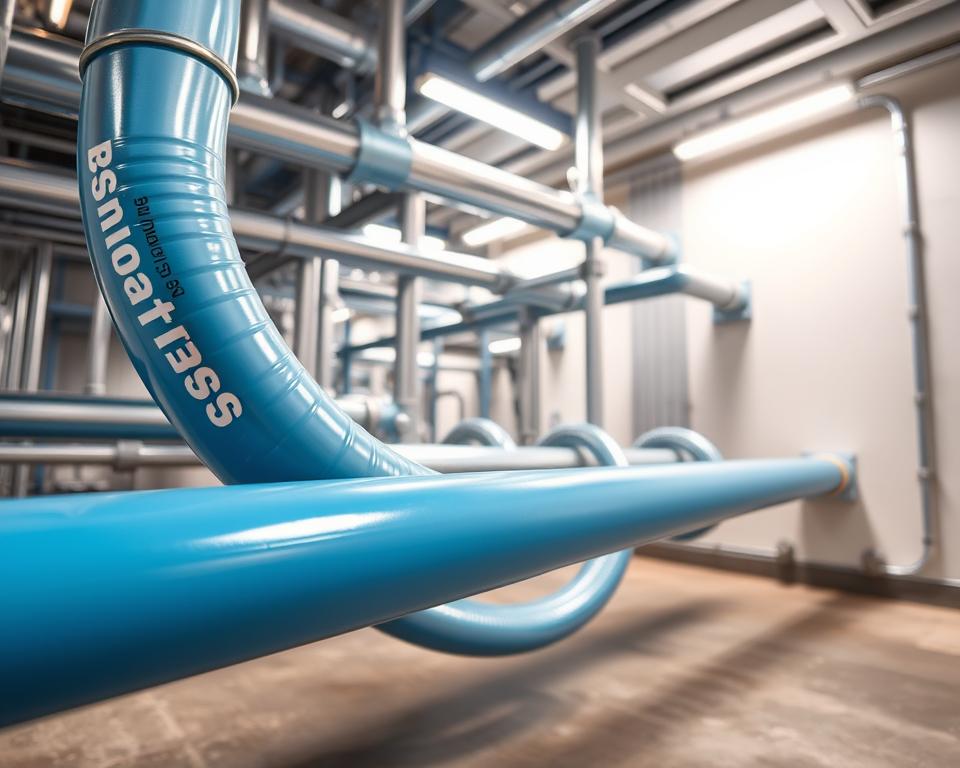
OSHA cites a $110,000 fine following a facility’s piping shattered, injuring workers. The “heat of compression” further reduces safety margins, a element often overlooked in specs.
“Above-ground use of specific plastics for pressurized air contravenes safety regulations owing to burst dangers.”
Metal alternatives fail more predictably, bending instead of fragmenting. In contrast, plastic debris from bursts can travel over fifty ft, lodging in structures or equipment.
Factories face daily temperature fluctuations that accelerate wear and tear. Over 10 years, sunlight damage and chemical reactions further weaken structure, transforming minor leaks into serious dangers.
Safe Alternatives To PVC Pipe For Air Compressor Lines
Aluminum pipe setups outperform conventional options in terms of protection and performance. With 90% fewer leaks than black pipe, they’re a top choice for modern buildings. Their lightweight design and rust protection make them ideal for extended service.
Modular aluminum systems save time—no threading required. The supplier provides pre-assembled sections that connect easily. A regional car factory cut work expenses by 40% following adopting this system.
- Copper Piping: Best for sterile areas because of natural antimicrobial properties. Needs soldering expertise.
- Steel Tubing: Resists rust in damp locations like coastal workshops.
- Plastic Composites: Solvent-proof for laboratories and factories using chemicals.
“Upgrading to aluminum reduced power loss by fifteen percent—paying for itself in a year and a half.”
Torque matters. Too tight joints break, while under-tightened ones drip. Follow manufacturer specs—typically 25 to 30 foot-pounds for aluminum joints.
In food processing settings, NSF-certified options ensure air purity. Constantly match pipes to your environment’s demands.
How To Choose The Right Piping Material For Your Needs
Picking the best substance for your system involves weighing cost, safety, and efficiency. A local plant preserved 12k per year by moving to sealed aluminum. This is how to take the right decision.
| Material | Price Per Foot | Upkeep | Payback Period |
|---|---|---|---|
| Aluminum | 8.50 USD | Low | 18 months |
| Black Pipe | 5.00 USD | High | None |
| Copper Tube | 10.20 USD | Moderate | 24 months |
Temperature matters. Aluminum handles extreme temps, while plastics shatter in the cold. In areas with chemicals, stainless steel repels solvents.
Expert Tip: Figure out ROI using CFM loss formulas. A 10% leak in a 50 HP system wastes $3,500 per year.
- Align pressure specs to your compressor’s output.
- Check safety standards for joint checks and stress testing.
- Request a free system audit from the supplier.
“Our aluminum retrofit reduced wasted power by 15%—paying for itself in 1.5 years.”
DIY installations work for hobby garages, but pros guarantee sealed connections. Always check warranty terms—some materials protect for 10+ years.
Final Thoughts
Picking the correct materials for your compressed air system goes beyond cost—it’s about protection. Research indicates most breakdowns happen in older systems, frequently with hazardous outcomes. Aluminum piping offers 99.8% reliability, rendering it a intelligent long-term choice.
Main points:
- Avoid brittle materials that break under stress.
- Choose rust-proof alloys like aluminium or stainless steel.
- Illegal setups invite citations and insurance issues.
Prepared to improve? Our team offers same-day quotes and limited-time discounts on introductory packages. Get our complimentary checklist or call for urgent parts.
Dedicate yourself to safer piping today—your team’s safety depends on it.